The information on this website is general in nature and does not take into account your objectives, financial situation, or needs. Consider seeking personal advice from a licensed adviser before acting on any information.
Nightclub operators in Australia may face insurance obligations from several places, including state and territory law, liquor licensing conditions, leases, finance agreements and commercial contracts. This guide explains how to separate legal requirements from contractual requirements and optional risk-management cover.
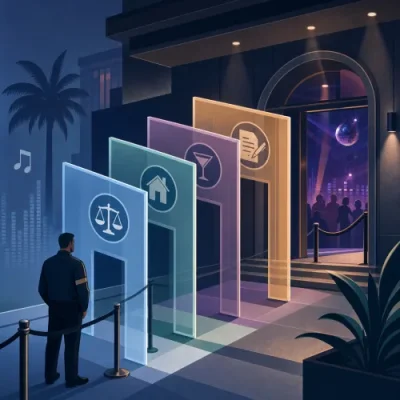
Nightclub insurance requirements in Australia are not set by one single national rule. For most venues, insurance obligations come from a mix of legislation, workers compensation rules, vehicle registration requirements, liquor licensing conditions, venue leases, finance agreements and supplier or event contracts.
That distinction matters. Some insurance may be required by law if you employ staff or operate registered vehicles. Other cover may be required because your landlord, lender, local council, event partner or liquor licence condition says so. Other policies may not be compulsory, but may still be important for managing the financial risks of operating a late-night hospitality venue.
This article provides general information for Australian nightclub owners, operators and hospitality managers. It does not replace legal, insurance or licensing advice for your venue's circumstances.
Where nightclub insurance requirements can come from
When people ask whether nightclub insurance is "required", the answer depends on the source of the obligation. A useful starting point is to separate the requirement into three categories:
| Source of requirement | What it may affect | Common examples |
|---|
| Law or regulation | Requirements imposed by legislation or regulatory systems | Workers compensation for employees; compulsory third party insurance for registered vehicles |
| Licence, lease or contract | Requirements imposed as a condition of trading, occupying premises or doing business with another party | Public liability insurance under a lease; evidence of cover for an event permit; noting a landlord or financier's interest |
| Risk-management decision | Cover chosen to protect the business even where it is not strictly compulsory | Property, stock, business interruption, management liability, cyber or assault-related extensions where available |
The same policy type can fall into different categories depending on your situation. For example, public liability insurance is not automatically a blanket legal requirement for every nightclub in Australia, but it is commonly required by landlords, councils, event organisers, venue hire agreements, financiers or licence-related conditions.
Insurance that may be required by law
Legal requirements vary across Australian states and territories, and the details can depend on your business structure, employment arrangements, vehicles and operations. Two areas commonly relevant to nightclub operators are workers compensation and registered vehicle insurance.
Workers compensation for nightclub employees
If your nightclub employs staff, workers compensation insurance is generally required under the workers compensation scheme that applies in your state or territory. This can include employees such as bar staff, security staff employed directly by the venue, floor staff, managers, DJs or other workers depending on the engagement structure and local rules.
Workers compensation is designed to support workers who suffer work-related injuries or illnesses. For nightclub operators, relevant workplace risks may include slips, manual handling injuries, glass cuts, burns, incidents involving intoxicated patrons, fatigue, noise exposure or violence-related injuries.
Operators should confirm which workers are covered, how wages are declared, whether contractors are treated as workers under the relevant scheme, and whether all venue duties have been accurately described to the insurer or scheme agent. State and territory rules can differ, so it is important to check the requirements that apply where the venue operates.
Compulsory third party insurance for registered vehicles
If the business owns or uses registered vehicles, compulsory third party insurance is generally part of the vehicle registration system. CTP arrangements vary by state and territory, but they typically relate to injury caused by the use of a registered motor vehicle.
CTP is different from commercial motor vehicle insurance. A nightclub might still consider separate cover for damage to a business vehicle, theft, fire, third-party property damage or equipment carried in the vehicle, depending on how the vehicle is used. Examples could include transporting stock, audio equipment, promotional materials or staff between venues.
Liquor licence and venue licensing considerations
Nightclub operators usually hold liquor-related approvals, and may also deal with entertainment, planning, security, noise, outdoor dining, crowd control or late-night trading conditions. Insurance requirements can arise directly or indirectly from those approvals.
Liquor licensing rules are state and territory based. Some conditions may require operators to maintain particular risk controls, provide evidence of insurance for certain activities, or comply with requirements imposed by a regulator, local council, police, building authority or event approval process. The exact position depends on the venue, licence type, trading hours, location and any specific conditions attached to the licence.
Insurance should not be treated as a substitute for responsible service of alcohol, security planning, incident registers, crowd management, staff training or compliance with licence conditions. Insurers may also expect venues to maintain appropriate risk-management procedures, and a claim may be affected if policy conditions or legal obligations are not met.
Public liability insurance and nightclub obligations
Public liability insurance is one of the most commonly discussed forms of nightclub insurance. It can respond to certain claims alleging personal injury or property damage to third parties, such as patrons, visitors, contractors, neighbouring businesses or members of the public.
For nightclubs, public liability considerations may include slips and trips, crowd movement, broken glass, wet floors, stairs, balconies, smoking areas, queues, cloakrooms, outdoor areas and incidents involving intoxicated patrons. The availability, terms, exclusions and premiums for public liability cover depend on the insurer's underwriting criteria and the venue's circumstances.
Public liability may be required under:
- Commercial leases, where the landlord requires a specified level of cover.
- Venue management agreements, especially where multiple parties operate within one site.
- Event permits, including council or private event approvals.
- Supplier or promoter contracts, where external parties require evidence of cover.
- Finance or franchise arrangements, where another party wants proof that key liability risks are insured.
For a deeper explanation of this policy type, see Understanding Public Liability Insurance for Nightclub Venues.
Lease requirements: what landlords often ask for
A commercial lease can be one of the most important documents for identifying nightclub insurance requirements. Landlords commonly require tenants to maintain certain types of insurance, provide certificates of currency and notify the landlord if cover changes or is cancelled.
Lease insurance clauses may refer to:
- Public liability insurance, often with a minimum limit stated in the lease.
- Glass or plate glass cover, especially for street-front venues.
- Property damage cover for tenant improvements, fit-out, fixtures or contents.
- Damage to landlord's property where the tenant may be responsible under the lease.
- Business interruption or loss of rent-related obligations, depending on the drafting.
- Noting the landlord's interest on relevant policies where required.
Operators should read the lease carefully rather than assuming a standard business insurance package will meet every obligation. The wording may specify insured parties, minimum limits, policy types, evidence requirements, renewal timing and consequences of non-compliance.
Finance, equipment and supplier contract requirements
Nightclubs often rely on financed or leased assets. Sound systems, lighting rigs, kitchen equipment, point-of-sale systems, refrigeration, furniture, security systems and vehicles may be subject to finance, hire purchase, rental or supplier agreements.
Those contracts may require the operator to insure the asset against loss or damage and to note the financier, owner or lessor's interest. If the venue fails to maintain required cover, it may breach the contract and remain liable for the asset even if it is damaged, stolen or destroyed.
Supplier, promoter and event contracts may also contain insurance clauses. These can be particularly important where the nightclub hosts external performers, ticketed events, private functions, pop-up activations or third-party entertainment providers. The contract may require public liability insurance, professional indemnity for certain service providers, personal accident cover for performers, or indemnities between the parties.
Insurance that may not be compulsory but may still matter
Some forms of nightclub business insurance may not be compulsory under law or contract, but may still be commercially important. Whether they are appropriate depends on the venue's risks, financial position, contractual obligations and insurer availability.
Examples include:
- Property and contents insurance for fit-out, furniture, sound equipment, lighting, stock, refrigeration, security systems and office equipment.
- Stock cover for alcohol, food and other consumables, noting that theft, spoilage and storage conditions may be subject to policy terms.
- Business interruption insurance for loss of income following an insured event that disrupts trading, subject to the policy's trigger, waiting periods and limits.
- Cyber insurance for risks involving online bookings, payment systems, customer data, email compromise or ransomware.
- Management liability for certain claims involving directors, officers, employment practices or statutory liability, subject to exclusions and legal insurability.
- Commercial motor insurance where vehicles are used for business purposes beyond basic registration requirements.
- Personal accident or income protection arrangements for owners or staff, noting these are different from workers compensation and depend on the policy structure.
For a broader overview of common cover types, you can read Essential Insurance Policies Every Nightclub Owner Should Know.
How to check your nightclub's insurance requirements
Because requirements come from different sources, a structured review can help operators avoid gaps or assumptions. Consider working through the following documents and questions.
- Check employment obligations. Confirm workers compensation registration, wage declarations and worker classifications for your state or territory.
- Review vehicle arrangements. Identify registered business vehicles and any commercial motor cover needed beyond CTP.
- Read the liquor licence and related approvals. Look for conditions involving insurance, safety plans, security, crowd control, events or late-night trading.
- Review the lease. Identify required policy types, minimum limits, interested parties, certificate of currency obligations and renewal dates.
- Check finance and equipment contracts. Identify assets that must be insured and any requirement to note another party's interest.
- Review supplier, promoter and event contracts. Look for indemnities, insurance limits, evidence requirements and responsibility for contractors.
- Compare requirements with actual policies. Confirm whether your current cover names the correct insured entities and reflects the venue's activities.
- Ask about exclusions and conditions. Pay attention to assault, security, alcohol-related incidents, events, door policies, unoccupied periods, fire protection, alarms and maintenance obligations.
If you are comparing broader nightclub insurance options, the compliance review should sit alongside a practical risk review. A policy may satisfy one contract requirement but still leave other operational risks uninsured.
Questions to ask before arranging or renewing cover
When speaking with an insurer or broker, nightclub operators may wish to ask questions such as:
- Does the policy reflect the correct legal entity, trading name and venue address?
- Does the insurer understand that the business operates as a nightclub or late-night licensed venue?
- Are live music, DJs, dance floors, private events, outdoor areas or promoted events included?
- Are security arrangements, RSA procedures and incident reporting requirements relevant to the policy?
- Are assault, intoxication, glass, slips, crowd control or queue-related incidents excluded or restricted?
- Do policy limits meet the lease, licence, event or finance contract requirements?
- Are landlords, financiers or other parties required to be noted on the policy?
- What evidence of cover can be provided, and how quickly can certificates of currency be updated?
- What changes must be disclosed during the policy period?
A specialist review can be useful where obligations are spread across several documents. You can use the site's brokers page as a starting point if you want help assessing insurance requirements against your venue's lease, licence and commercial contracts.
Common mistakes to avoid
Nightclub insurance can become complicated because venues operate in a higher-risk environment and often involve multiple stakeholders. Common mistakes include:
- Assuming public liability is the only important cover. It may be central, but property, stock, interruption, cyber, vehicle and employment-related risks may also matter.
- Ignoring the lease wording. A landlord's insurance requirements may be more specific than expected.
- Using a generic business description. Insurers need to understand the actual nightclub activities, trading hours, entertainment and alcohol service.
- Forgetting contractors and promoters. External parties may need their own insurance, and your contracts should clarify responsibilities.
- Not updating cover after changes. Renovations, increased capacity, new security arrangements, changed trading hours or new events can affect insurance.
- Relying on verbal assumptions. Keep written evidence of policy terms, certificates of currency and contract requirements.
Key takeaway
Nightclub insurance requirements in Australia can come from law, licensing conditions, leases, finance agreements and commercial contracts. Workers compensation and vehicle-related insurance are common legal considerations, while public liability and property-related cover are often driven by leases, permits and contracts. Other policies may be optional from a compliance perspective but still important for managing the financial impact of claims, damage or business interruption.
The safest approach is to identify every source of obligation, compare those requirements with your current policies and seek qualified guidance where the wording is unclear. Insurance availability, terms, exclusions and pricing will depend on the venue's circumstances and insurer criteria.
Published: Saturday, 22nd Aug 2026
Author: Paige Estritori



No comments yet. Be the first to share your thoughts.